Agent infrastructure · Prototype
Reviewed
Actions.
An agent can propose a change. A person can approve it. The application still has to decide whether that change is allowed.
Approval has a
shelf life.
A support lead reviews a proposed update. While the review is open, a ticket changes, another person claims it, or the reviewer loses access to the workspace. A button labeled “Approve” doesn’t tell the system how to handle any of those cases.
Reviewed Actions explores that boundary: bind approval to the change the person saw, then check the current state before writing.
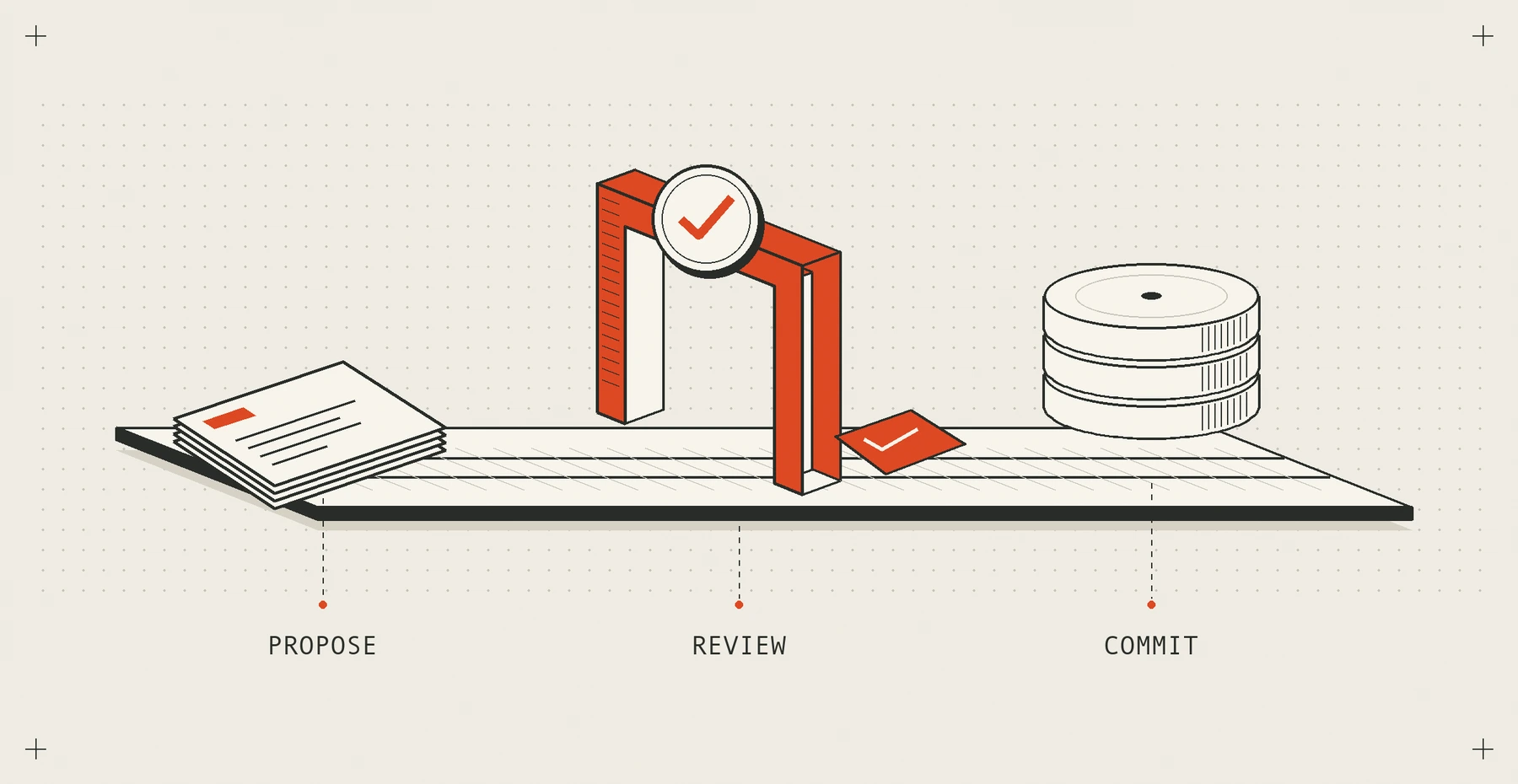
The system
From suggestion
to a committed change.
- ProposeA signed-in user requests a resolution. The application checks workspace membership and records the proposed change.
- ReviewThe person sees the ticket ID and the change from open to resolved. The database still contains an open ticket.
- RecheckAt confirmation, the application checks current permissions and the proposed change again.
- CommitThe allowed update and its receipt commit together, giving the application a record of what happened.
Interactive explanation
Try changing the permission.
Approve once with access enabled. Reset, revoke access, and try again. This is a browser illustration of the workflow, not a connection to the prototype’s database.
Resolve a support request
Proposed change
Ready for reviewThe ticket is still open. Nothing has been written.
An interactive explanation, running locally in your browser. No AI call or real data is involved.
Field note · November 2026
The session worked.
The write was blocked.
In a controlled Supabase test, a member opened a valid review and then lost workspace access. Their session still authenticated. At approval, the workflow checked current membership, returned HTTP 404, and left the ticket open. A separate database read confirmed that the receipt remained uncommitted.
| Path | Response | Database outcome |
|---|---|---|
| Valid approval | HTTP 200 | Ticket resolved; receipt committed |
| Access revoked before approval | HTTP 404 | Ticket open; receipt uncommitted |
What this establishes.
What it doesn’t.
The test demonstrates the expected behavior for a specific access-revocation path. It is not a security certification or evidence that every concurrent interleaving is safe. Broader production behavior and external adoption remain unvalidated.
The next questions are about stale records, repeat confirmations, and how clearly the interface explains a blocked or changed proposal. A related experiment explores whether approving twelve tickets still authorizes the write when the batch’s membership changes.